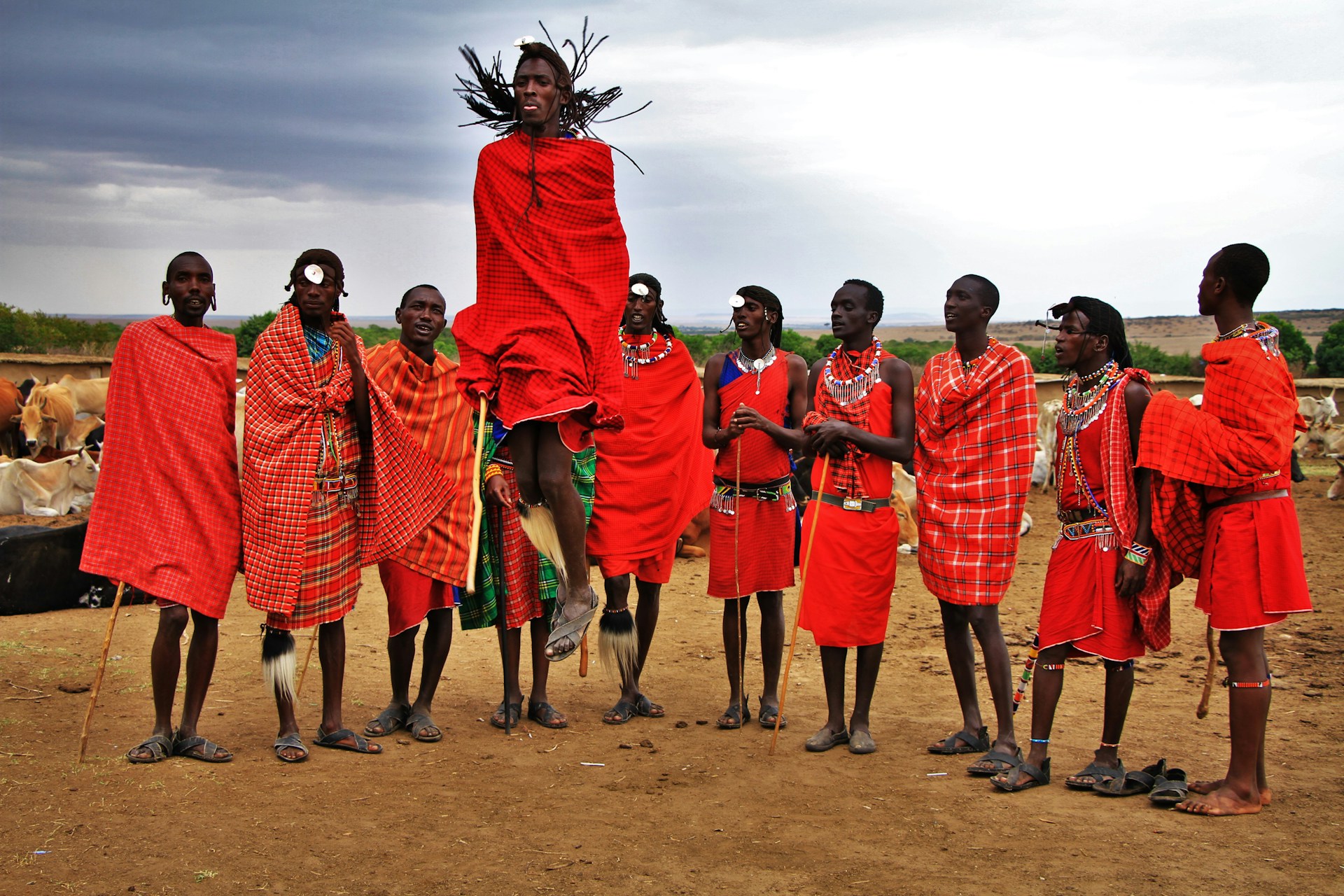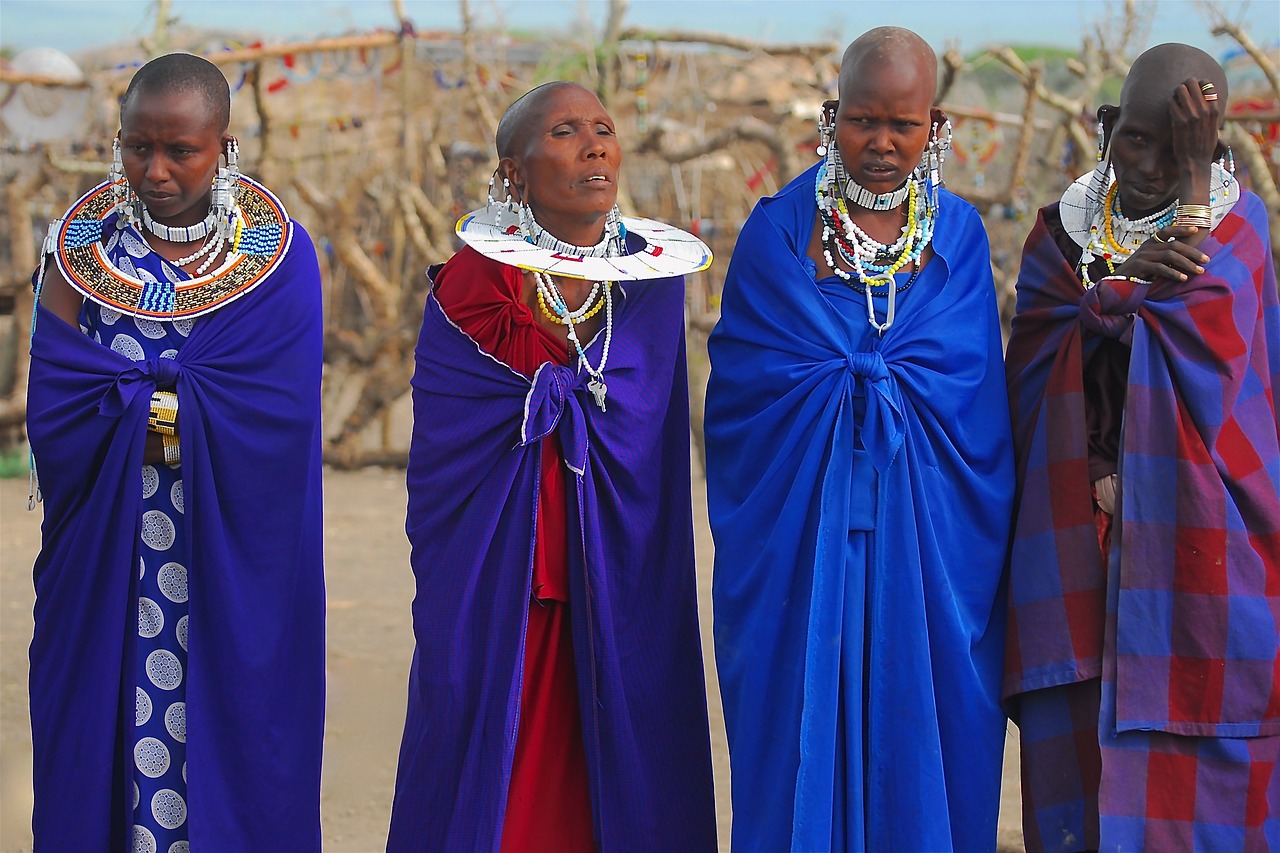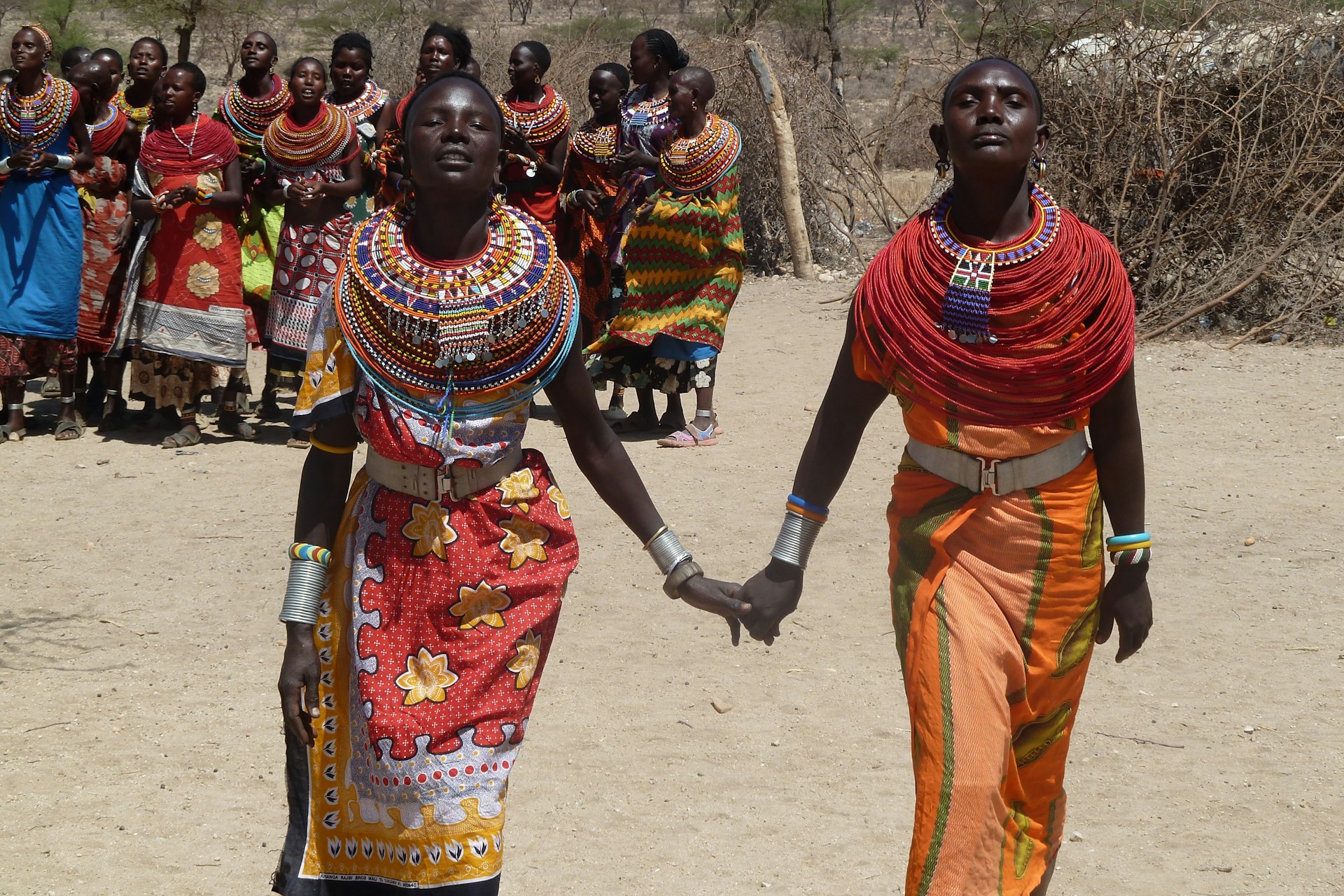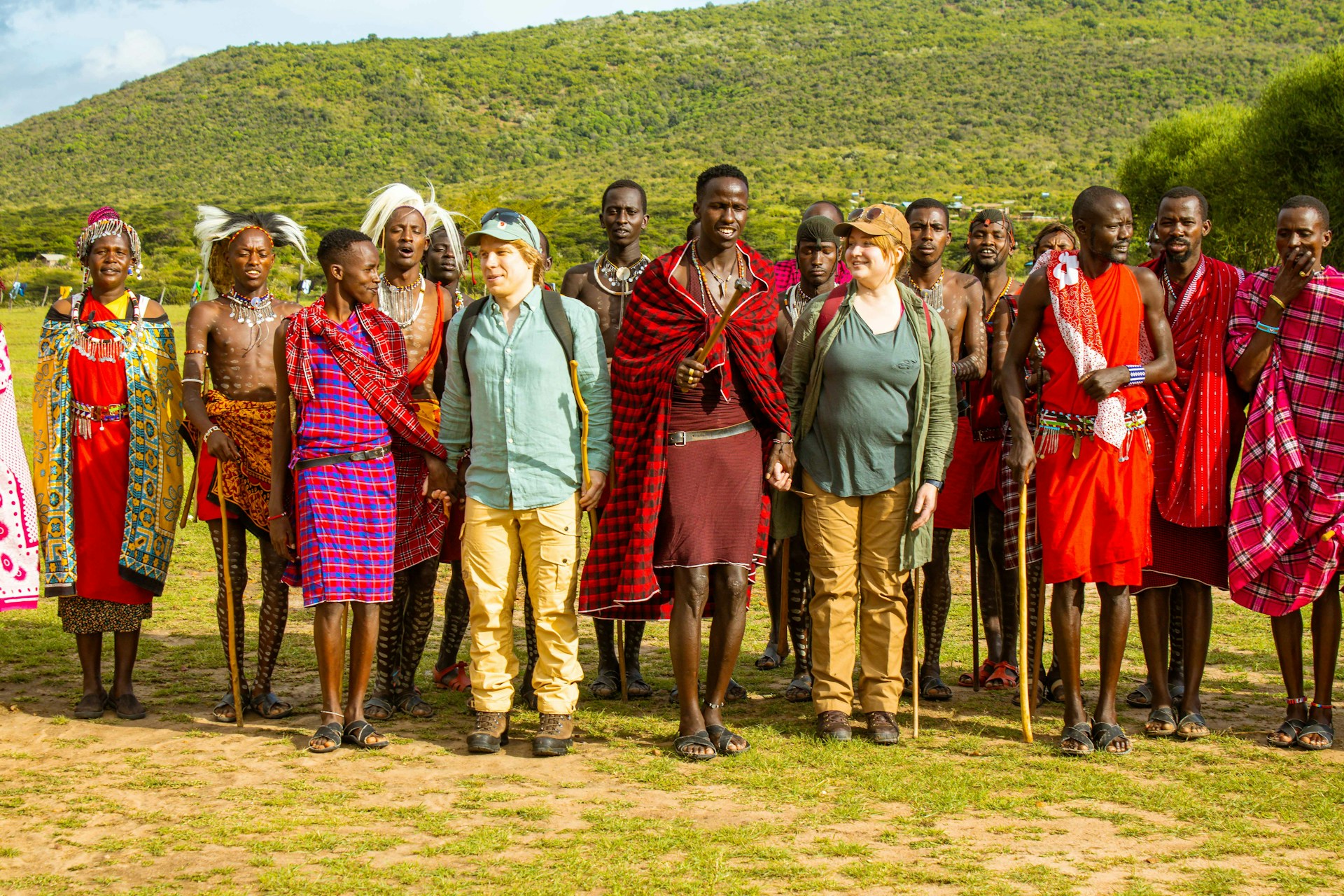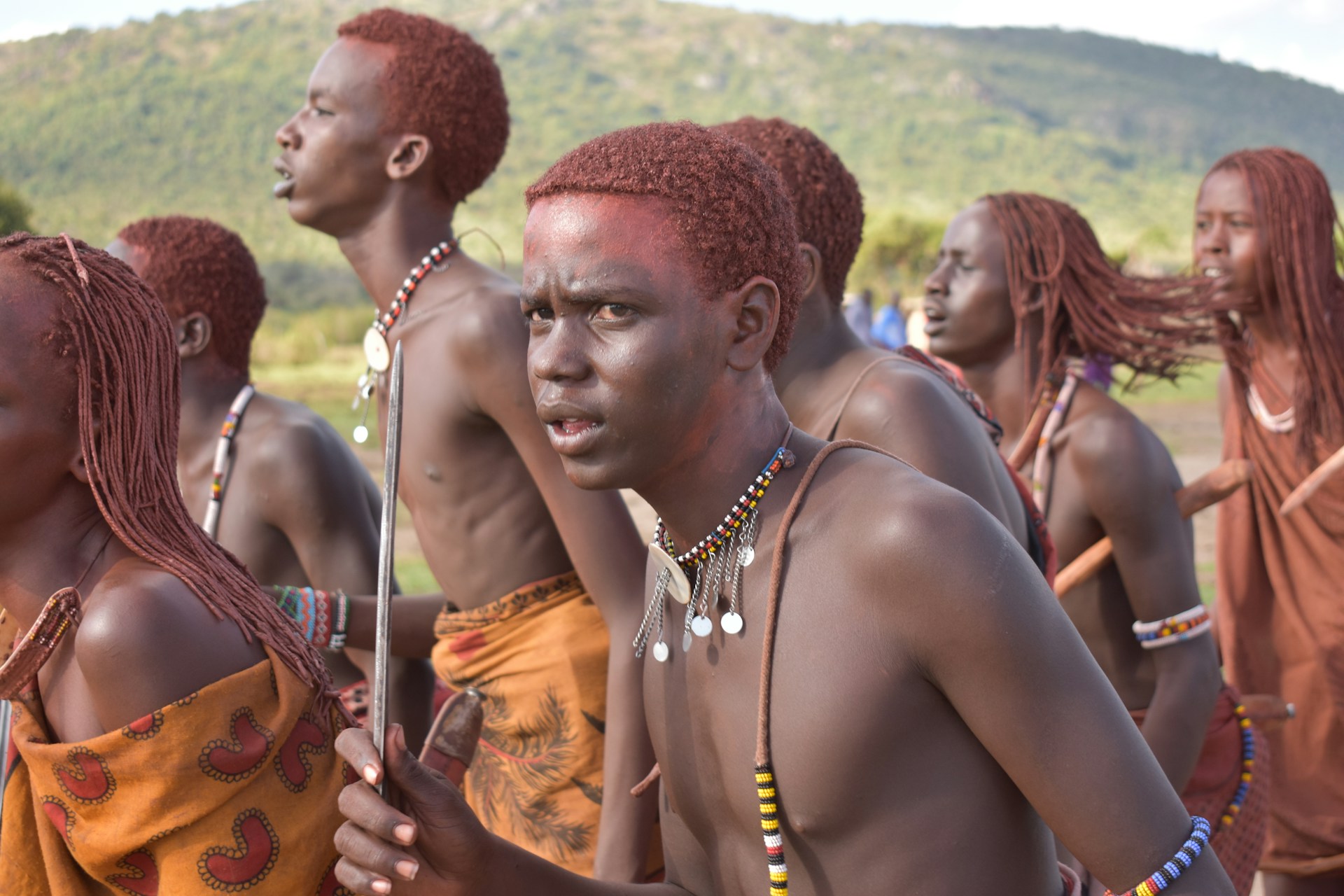
A Masai village, locally called a ‘boma’, is a traditional circular Maasai homestead made of thorn-bush fencing and mud-and-stick huts, built to protect families and livestock from wildlife. Found across Kenya and Tanzania, a Masai village visit offers travellers a firsthand look at one of East Africa’s most recognisable cultures, from beadwork and dance to daily life inside the boma.
A boma is more than a cluster of huts, it’s a functioning family compound built around Maasai traditions of protection, community, and livestock. Understanding its structure helps explain why every boma looks and functions the same way, whether you’re visiting a Masai village in Kenya near the Mara or a Masai village in Tanzania close to the Serengeti.
The outer ring is a fence of thorn bushes, keeping predators out at night. Inside, individual huts (manyattas) made of mud, sticks, and cow dung house separate families, arranged in a circle around a central livestock enclosure.
Maasai society is patriarchal, with elders holding decision-making authority. Women build the huts, raise children, and manage milking, while men are traditionally responsible for grazing cattle and defending the boma.
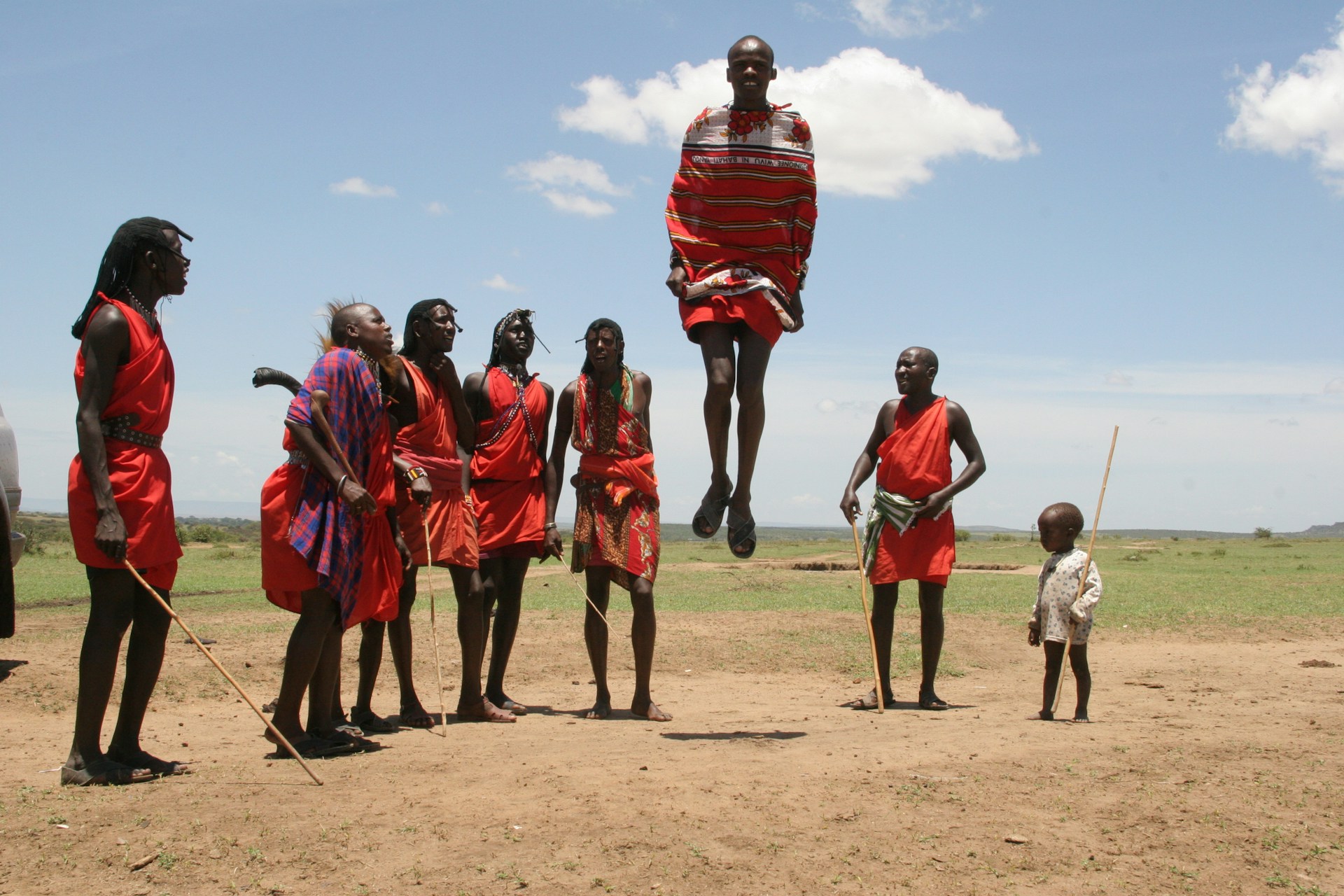
Traditional Welcome: Maasai warriors typically greet visitors with the adumu, a rhythmic jumping dance, accompanied by chanting and songs.
Cultural Demonstrations: A local guide explains the boma’s layout, hut construction, and daily routines, often including live demonstrations of beadwork, fire-starting, or milking.
Local Crafts and Souvenirs: Most villages sell handmade jewellery, beaded accessories, and carvings directly from artisans, with proceeds supporting the community.
Tourism income matters to many Maasai communities, but not every visit is equally authentic. Choosing the right operator makes the difference between a respectful cultural exchange and a staged photo stop.
Etiquette Tips: Dress modestly, covering shoulders and knees, and always ask permission before photographing people. Avoid haggling aggressively over craft prices, since sales often go directly to the family.
Choosing a Responsible Operator: Look for tour operators who partner directly with specific communities rather than generic “tourist bomas” and who reinvest part of the visit fee into local schools or water projects.
A Masai village Kenya visit is most commonly arranged as a short excursion from the Maasai Mara National Reserve, either before or after a game drive. These villages sit just outside the reserve, giving travellers an authentic Maasai cultural stop that pairs naturally with a Maasai Mara safari. Most visits run 45–90 minutes and include a welcome dance, a walk through the boma, and time with local artisans.
A Masai village Tanzania visit typically takes place near the Ngorongoro Conservation Area or along routes to the Serengeti, where Maasai communities still practise semi-nomadic pastoralism. These villages are often slightly larger and more remote than their Kenyan counterparts, offering a quieter, less touristed experience for travellers extending their safari into Tanzania.
A Masai village is called a ‘boma’ or ‘manyatta’, referring to the circular homestead where extended Maasai families live together.
Yes. Most Masai villages near the Maasai Mara (Kenya) and Ngorongoro/Serengeti (Tanzania) welcome guided tourist visits, usually arranged through a local safari operator.
Yes, guided village visits are safe and common, typically included as an add-on to a Kenya or Tanzania safari itinerary.
Modest, breathable clothing that covers shoulders and knees is recommended, along with comfortable walking shoes for uneven ground.
Most guided visits last 45 minutes to 2 hours, depending on whether cultural demonstrations and craft shopping are included.