
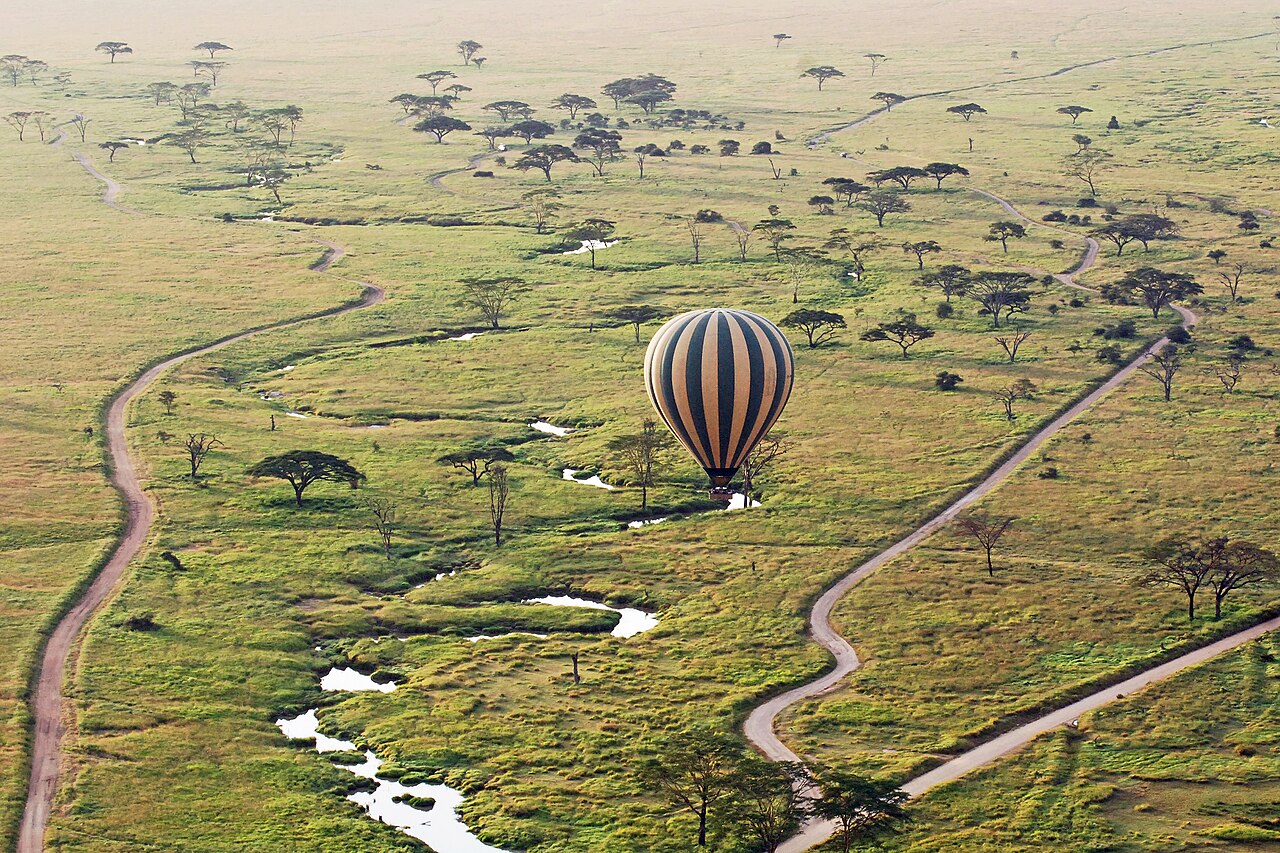
A hot air balloon safari in Kenya takes place over the Maasai Mara at sunrise. Flights last approximately 1 hour, carry 8–16 passengers, and typically conclude with a champagne bush breakfast. It is one of Africa’s most iconic experiences and is available year-round, with peak demand during the Great Migration (July–October). Advance booking is essential.
What Is a Hot Air Balloon Safari in Kenya?
A hot air balloon safari in Kenya is a guided aerial flight over the Maasai Mara National Reserve, departing before dawn and floating silently above the savannah as the sun rises. Unlike a ground game drive, the balloon offers a panoramic, unobstructed view of wildlife, river crossings, and open plains from above. Flights are operated by licensed operators, with groups of 8 to 16 passengers per basket, and the entire experience from pre-dawn departure to bush breakfast takes around 4 hours.
Why Choose a Hot Air Balloon Safari in Kenya?
A balloon safari delivers a perspective on the Maasai Mara that no game drive can replicate. Floating silently at low altitude, passengers observe wildlife behaving naturally, undisturbed by vehicles or engine noise. It combines adventure, luxury, and wildlife in a single two-hour morning window that most safari-goers call the highlight of their entire Kenya tour.
Unmatched Aerial Views of the Maasai Mara
From the air, the full scale of the Maasai Mara becomes visible: vast open plains, winding river channels, and animal herds stretching to the horizon. Passengers regularly spot elephant herds; giraffes; lions; cheetahs; hippo pods; and, during migration season, columns of wildebeest crossing the Mara River. The bird’s-eye angle also makes it possible to track predator-prey interactions invisible from ground level.
Best for: Wildlife photography, spotting large herds, understanding the landscape’s geography.
An Exclusive, Intimate Experience
Balloon baskets are divided into compartments carrying 2–4 passengers each, with a total capacity of 8–16 per flight. No two flights carry the same wind pattern or route, making every experience unique. The silence of balloon travel no engine, no radio chatter creates a calm that is impossible to replicate in a safari vehicle.
Best for: honeymooners, anniversary travellers, those seeking a quieter, crowd-free experience.
A Memorable Start to Your Safari Day
The morning begins before 5:30 AM with a pre-dawn transfer to the launch site, where hot drinks are served while the balloon is inflated. As the basket lifts off, the savannah shifts from darkness to golden light within minutes. The contrast of sunrise colours, cool morning air, and the sounds of waking wildlife below creates one of the most atmospheric moments in African travel.
Best for: Photographers, early risers, and travellers who want to make the most of every safari morning.
What to Expect: The Full Hot Air Balloon Safari Experience
Understanding exactly what happens during a balloon safari helps travellers plan and arrive prepared. The experience follows a consistent sequence, from pre-dawn pickup to a full bush breakfast after landing. Here is what each stage involves.
Sunrise Over the Maasai Mara Savannah
Flights launch between 5:30 AM and 6:00 AM, timed to catch the golden hour. As the balloon climbs, the first light of day spreads across the plains below. The Mara River glints in the distance, and the horizon opens up in every direction. This window, roughly the first 20 minutes of flight, is typically when passengers take the most photographs and when wildlife is most active on the ground.
Spectacular Wildlife Sightings from Above
From an altitude of 50 to 300 metres, the balloon drifts over areas of the Mara inaccessible to safari vehicles. Pilots adjust altitude to follow animal movements. Common sightings include elephant family groups moving between water sources, lions on morning hunts, hippos emerging from rivers, and during July–October, thousands of wildebeest in migration columns. The silence of the balloon means animals rarely react to its presence.
Champagne Bush Breakfast After Landing
Upon landing, typically 45–75 minutes after launch, a white-tablecloth breakfast is laid out in the bush wherever the balloon comes to rest. Most operators serve eggs, toast, fresh fruit, juice, tea, coffee, and sparkling wine in the open savannah, often with no other humans visible for miles. A certificate of flight is usually presented at the conclusion. This segment lasts approximately 45–60 minutes before the return transfer to camp.
Essential Tips for Your Hot Air Balloon Safari
Preparation makes the difference between a good balloon safari and a great one. A few practical steps from what to wear to when to book ensure the experience goes smoothly from pre-dawn pickup to post-landing breakfast.
Dress in Warm Layers
Morning temperatures in the Mara can drop to 12–16°C at launch time, even in the dry season. Light jackets, a fleece, and a scarf are recommended. By mid-flight, temperatures rise as the sun climbs, so removable layers are preferable to a single heavy coat. Closed-toe shoes are required by most operators for basket safety.
Book Well in Advance
Hot air balloon flights over the Maasai Mara operate daily but with strictly limited capacity. During peak season (July–October, coinciding with the Great Migration), spaces sell out weeks ahead. Even in the low season, same-day or next-day booking is rarely possible. Travellers should secure their balloon flight at the time of booking their overall safari package.
Bring a camera and fully charged batteries.
The flight produces photography conditions found nowhere else: wide open skies, low-angle sunrise light, and wildlife undisturbed by your presence. A camera with a zoom lens (70–200mm or equivalent) is ideal. Bring extra batteries, as cold morning temperatures drain battery life faster than normal. A wide-angle lens is useful for capturing the balloon, basket, and landscape together.
When Is the Best Time for a Hot Air Balloon Safari in Kenya?
| Season | Conditions | Wildlife Highlights |
|---|---|---|
| July – October (Peak) | Dry, clear skies, excellent visibility | Great Migration river crossings, predator activity |
| November – December | Short rains, dramatic skies | Calving season begins, lush green scenery |
| January – March | Warm and dry on the plains | Wildebeest calving in Serengeti, resident Big Five |
| April – June | Long rains, some overcast mornings | Fewer crowds, lower prices, green landscape |
Balloon safaris operate year-round. July to October delivers the highest chance of witnessing migration crossings from the air. January to March offers reliable dry weather and excellent Big Five sightings without peak-season crowds.
How to Book a Hot Air Balloon Safari with Ket Safaris
Ket Safaris includes hot air balloon flights as an add-on to all Maasai Mara safari packages. The balloon experience is combined with at least two full days of ground game drives, ensuring travellers see the Mara from both the air and the savannah floor. Accommodation options range from mid-range tented camps to luxury lodges within or adjacent to the reserve.
Included in most balloon safari packages:
- Pre-dawn transfer to the launch site
- In-flight commentary from a licensed pilot
- Approximately 60 minutes of flight time
- Bush champagne breakfast after landing
- Flight certificate
- Return transfer to camp or lodge
FAQ’s
How long does a hot air balloon safari in Kenya last?
The total experience runs approximately 3.5 to 4 hours, including pre-dawn pickup, the balloon flight (around 60 minutes), and the post-landing bush breakfast.
Is a hot air balloon safari in Kenya safe?
Yes. Licensed operators in the Maasai Mara are regulated by the Kenya Civil Aviation Authority. Pilots are certified and experienced. Weather checks are conducted before every flight, and departures are postponed if conditions are unsuitable.
How much does a hot air balloon safari in Kenya cost?
Prices typically range from USD $450 to $650 per person, depending on the operator and season. The cost usually includes the flight, breakfast, and transfers. Contact Ket Safaris for current package pricing.
What wildlife can you see from a hot air balloon over the Mara?
Common sightings include elephants, lions, cheetahs, giraffes, zebras, wildebeest, hippos, and a wide variety of birds. During the Great Migration (July–October), large herds of wildebeest and crossing events are frequently visible from the air.
Can children go on a hot air balloon safari?
Most operators set a minimum age of 7 years and a minimum height requirement. Children must be able to stand independently in the basket for the duration of the flight. Confirm specific age and weight restrictions at the time of booking.
What is the best time of year for a balloon safari in Kenya?
July to October is peak season, offering the best wildlife density and Great Migration sightings. However, balloon safaris offer exceptional experiences in every month of the year.

